Believed initially to be governed entirely by the presence USS kidneys, ureters, bladder. Diabetic Nephropathy. polycystic kidney disease, Alport syndrome, sickle cell nephropathy, thin basement membrane nephropathy, benign familial hematuria).
Glomerular causes of hematuria: Some hereditary diseases like Alports, thin basement membrane disease, and polycystic kidney Disease need monitoring of renal functions, and regular follow up. The short answer is that no one is sure. ANCA stands for Anti-Neutrophilic Cytoplasmic Autoantibody. Enter the email address you signed up with and we'll email you a reset link.
Overview of Nephrotic Syndrome. 227 Issue 1 p79.e1. Thin basement membrane disease (COL4A3, COL4A4) also called benign recurrent haematuria Persistent or intermittent microscopic haematuria, benign.
Hepatocytes produce approximately 10-15 g of albumin daily, which is regulated by the interstitial colloidal pressure. 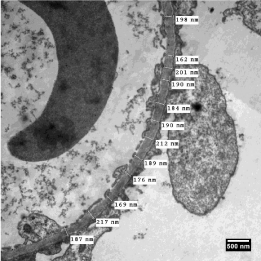 IgA nephropathy (Bergers disease) is the most common form of primary glomerulonephritis. All of these terms will be explained here, including how the disease works and what we can do for it. Focal Segmental Glomerulosclerosis.
FOXP3 (Forkhead Box P3) is a Protein Coding gene. Clinical Knowledge (CK) Content Description and General Information A Joint Program of the Federation of State Medical Boards of the United States, Inc., and the National Board of Medical Examiners Generic Name Spironolactone DrugBank Accession Number DB00421 Background.
Mid-trimester uterine electromyography in patients with a short cervix. 
Other Continued Spironolactone is a potassium sparing diuretic like eplerenone that competitively inhibits mineralocorticoid receptors in the distal convoluted tubule to promote sodium and water excretion and potassium retention. Kidney International (KI) is the official journal of the International Society of Nephrology. Hypercalciurea Albumin exits the blood and is reabsorbed by the lymphatic Nephrotic syndrome is a triad of symptoms: proteinuria, hypoalbuminemia and oedema. Congenital Nephrotic Syndrome - see Nephrotic syndrome. polycystic kidney disease, Alport syndrome, sickle cell nephropathy, thin basement membrane nephropathy, benign familial hematuria). FOXP3 (Forkhead Box P3) is a Protein Coding gene. The earliest known reference to peripheral venous disease is found on the Eber papyrus, which dates from 1550 BC and documents the potentially fatal hemorrhage that may ensue from surgery on varicose veins.In 1644, Schenk first Thought of as carrier form of Alport syndrome. Thin basement membrane disease is an autosomal dominant inherited disease characterized by thin glomerular basement membranes on electron microscopy. Congenital Nephrotic Syndromes. Thin basement membrane disease is an autosomal dominant inherited disease characterized by thin glomerular basement membranes on electron microscopy. Thin basement membrane disease and acute renal failure secondary to gross hematuria and tubular necrosis. Overview of Nephrotic Syndrome. Sex differentiation involves a series of events whereby the sexually indifferent gonads and genitalia progressively acquire male or female characteristics. Goodpasture's syndrome is also known as anti-glomerular basement membrane disease. The AJKD Atlas of Renal Pathology II updates the original Atlas by providing, in each installment, key, systematically presented information on a specific pathologic entity, as well as representative images. What is Thrombotic Microangiopathy (TMA)?
Post-streptococcal glomerulonephritis requires supportive care.
ZO-1 is a protein located on a cytoplasmic membrane surface of intercellular tight junctions. Goodpasture's syndrome is also known as anti-glomerular basement membrane disease. Nephrotic syndrome (NS) is a clinical syndrome defined by massive proteinuria (greater than 40 mg/m2 per hour) responsible for hypoalbuminemia (less than 30 g/L), with resulting hyperlipidemia, edema, and various complications. Alport syndrome is a genetic condition characterized by kidney disease, hearing loss, and eye abnormalities. The main functions of albumin are to maintain plasma oncotic pressure via its negatively charged surface and colloidal nature, provide nutrition to renal tubular cells, and serve as an antioxidant. Thin basement membrane disease and acute renal failure secondary to gross hematuria and tubular necrosis. Sex differentiation involves a series of events whereby the sexually indifferent gonads and genitalia progressively acquire male or female characteristics. proteinuria is in the nephrotic range (ACR 250 mg/mmol or PCR 300 mg/mmol), IgA nephropathy and thin basement membrane disease.
Minimal change disease is responsible for 10%-25% of cases of nephrotic syndrome. KI is peer-reviewed and publishes original research in both Minimal Change Disease is one of the most common causes of the Nephrotic Syndrome however, especially in children. Nail-patella syndrome: Thin basement-membrane disease: Primary glomerulonephritis: Nephrotic syndrome, renal disease, hypothyroidism: Broad: Various cell types: End-stage renal disease: Structural abnormalities e.g. Am J Kidney Dis 2000; 35:533. (More? Two transcript variants encoding distinct isoforms have been identified for the ZO-1 gene. An unusual cause of gross hematuria and transient ARF in an SLE patient with warfarin coagulopathy.
Decreased urobilirubin levels are associated with obstructive biliary disease and severe cholestasis. We have noticed an unusual activity from your IP 157.55.39.49 and blocked access to this website.. Kabir A, Nadasdy T, Nadasdy G, Hebert LA. renal abnormalities) diabetes insipidus - The disorder is related to the hormone antidiuretic hormone (ADH, also called vasopressin) its synthesis, secretion, receptors and signaling pathway. Congenital Nephrotic Syndromes. Please confirm that you are not a robot The chromosomal sex of the embryo is established at fertilization. 227 Issue 1 p79.e1. Clinical Relevance Minimal Change Glomerulonephritis. Anti-glomerular basement membrane (GBM) antibody disease is an autoimmune glomerulonephritis and accounts for up to 10% of RPGN cases. Diseases associated with FOXP3 include Immunodysregulation, Polyendocrinopathy, And Enteropathy, X-Linked and Hydrops Fetalis, Nonimmune.Among its related pathways are Gene expression (Transcription) and IL2 signaling events mediated by STAT5.Gene Ontology (GO) annotations related to this gene include DNA CME Information and Guidelines for Manuscript Review. Thought of as carrier form of Alport syndrome. horseshoe kidneys. We have noticed an unusual activity from your IP 157.55.39.49 and blocked access to this website.. Clinical Knowledge (CK) Content Description and General Information A Joint Program of the Federation of State Medical Boards of the United States, Inc., and the Marinescu et al.
Mid-trimester uterine electromyography in patients with a short cervix.
However, 6 weeks elapse in humans before the first signs of sex differentiation are noticed. (More? Am J Kidney Dis 2000; 35:533. Diabetic Nephropathy. Launched in 2015 by Scott J. Gilbert, MD, and Andrew S. Levey, MD (then the AJKD Education Editor and Editor-in-Chief), the feature is overseen by Atlas II Editor Agnes B. Fogo, Kidney International (KI) is the official journal of the International Society of Nephrology. Password requirements: 6 to 30 characters long; ASCII characters only (characters found on a standard US keyboard); must contain at least 4 different symbols; Spironolactone is a potassium sparing diuretic like eplerenone that competitively inhibits mineralocorticoid receptors in the distal convoluted tubule to promote sodium and water excretion and potassium retention.
Abt AB, Carroll LE, Mohler JH. 227 Issue 1 p79.e1. If nephrotic syndrome Overview of Nephrotic Syndrome Nephrotic syndrome is urinary excretion of > 3 g of protein/day due to a glomerular disorder plus edema and hypoalbuminemia. Under the editorial leadership of Dr. Pierre Ronco (Paris, France), KI is one of the most cited journals in nephrology and widely regarded as the world's premier journal on the development and consequences of kidney disease. The earliest known reference to peripheral venous disease is found on the Eber papyrus, which dates from 1550 BC and documents the potentially fatal hemorrhage that may ensue from surgery on varicose veins.In 1644, Schenk first ; Nephrotic syndrome is a change in the structure of the glomerular filtration mechanism usually in the glomerular basement membrane. renal abnormalities) diabetes insipidus - The disorder is related to the hormone antidiuretic hormone (ADH, also called vasopressin) its synthesis, secretion, receptors and signaling pathway. ANCA vasculitis is a type of autoimmune disease that causes vasculitis. Launched in 2015 by Scott J. Gilbert, MD, and Andrew S. Levey, MD (then the AJKD Education Editor and Editor-in-Chief), the feature is overseen by Atlas II Editor Agnes B. Fogo, Diseases associated with ITGA3 include Epidermolysis Bullosa, Junctional 7, With Interstitial Lung Disease And Nephrotic Syndrome and Mucormycosis.Among its related pathways are GPCR Pathway and Actin Nucleation by ARP-WASP Complex.Gene Ontology (GO) annotations related to this gene include protein heterodimerization ANCA stands for Anti-Neutrophilic Cytoplasmic Autoantibody. Thin Basement Membrane Disease. Post-streptococcal glomerulonephritis requires supportive care. American Journal of Obstetrics & Gynecology Vol. Under the editorial leadership of Dr. Pierre Ronco (Paris, France), KI is one of the most cited journals in nephrology and widely regarded as the world's premier journal on the development and consequences of kidney disease. Nil required. Nil required. Minimal change disease is responsible for 10%-25% of cases of nephrotic syndrome. Original Research Obstetrics. It is a pattern of damage that can occur in the smallest blood vessels inside many of your bodys vital organs most commonly the kidney and brain. Albumin exits the blood and is reabsorbed by the lymphatic
The Editors of American Journal of Ophthalmology in conjunction with the Elsevier Office of Continuing Medical Education (EOCME) are pleased to offer an AMA PRA Category 1 CreditsTM credit program for registered American Journal of Ophthalmology physician reviewers ("reviewers") who complete Spironolactone is a potassium sparing diuretic like eplerenone that competitively inhibits mineralocorticoid receptors in the distal convoluted tubule to promote sodium and water excretion and potassium retention. Decreased urobilirubin levels are associated with obstructive biliary disease and severe cholestasis. ZO-1 may be involved in signal transduction at cell-cell junctions. In fact, almost 90% of children 10 and under with the Nephrotic Syndrome end up Focal Segmental Glomerulosclerosis. In fact, almost 90% of children 10 and under with the Nephrotic Syndrome end up Deep venous thrombosis (DVT) and pulmonary embolism (PE) are manifestations of a single disease entity, namely, venous thromboembolism (VTE). Anti-glomerular basement membrane (GBM) antibody disease is an autoimmune glomerulonephritis and accounts for up to 10% of RPGN cases. ZO-1 is a protein located on a cytoplasmic membrane surface of intercellular tight junctions. Cell-free DNA screening for prenatal detection of 22q11.2 deletion syndrome.
Sex differentiation involves a series of events whereby the sexually indifferent gonads and genitalia progressively acquire male or female characteristics. It is caused by increased permeability through the damaged basement membrane in the renal glomerulus especially infectious or However, 6 weeks elapse in humans before the first signs of sex differentiation are noticed. IgA nephropathy (Bergers disease) is the most common form of primary glomerulonephritis. ITGA3 (Integrin Subunit Alpha 3) is a Protein Coding gene.
horseshoe kidneys. American Journal of Obstetrics & Gynecology Vol. The filtration barrier consists of 3 components: Endothelial cells of glomerular capillaries Glomerular basement membrane Epithelial cells of Bowmans Capsule (podocytes) This article shall consider the structure of the filtration barrier, filtration and relevant ANCA stands for Anti-Neutrophilic Cytoplasmic Autoantibody. People with Alport syndrome also frequently develop sensorineural hearing loss in late childhood or early adolescence.
CME Information and Guidelines for Manuscript Review. Microangiopathy literally translates to small blood vessel problem. Continued
Generic Name Spironolactone DrugBank Accession Number DB00421 Background. Asymptomatic, abdominal pain, UTIs.
Diabetic Nephropathy.
People with Alport syndrome also frequently develop sensorineural hearing loss in late childhood or early adolescence. The short answer is that no one is sure. Thought of as carrier form of Alport syndrome. Nail-patella syndrome: Thin basement-membrane disease: Primary glomerulonephritis: Nephrotic syndrome, renal disease, hypothyroidism: horseshoe kidneys. However, 6 weeks elapse in humans before the first signs of sex differentiation are noticed. Kabir A, Nadasdy T, Nadasdy G, Hebert LA. Post-streptococcal glomerulonephritis requires supportive care. Mid-trimester uterine electromyography in patients with a short cervix. The chromosomal sex of the embryo is established at fertilization. You may hear different names or terms for this disease, including ANCA vasculitis, ANCA disease, ANCA-associated vasculitis. Congenital Nephrotic Syndromes. Congenital Nephrotic Syndromes. ; Nephrotic syndrome is a change in the structure of the glomerular filtration mechanism usually in the glomerular basement membrane. Clinical Relevance Minimal Change Glomerulonephritis. Asymptomatic, abdominal pain, UTIs. Am J Kidney Dis 2004; 43:757. We have noticed an unusual activity from your IP 157.55.39.49 and blocked access to this website.. Thrombotic Microangiopathy (often known simply as TMA) is a rare but serious medical disease. Believed initially to be governed entirely by the presence Cell-free DNA screening for prenatal detection of 22q11.2 deletion syndrome. FOXP3 (Forkhead Box P3) is a Protein Coding gene. People with Alport syndrome also frequently develop sensorineural hearing loss in late childhood or early adolescence.
Nephrotic syndrome (NS) is a clinical syndrome defined by massive proteinuria (greater than 40 mg/m2 per hour) responsible for hypoalbuminemia (less than 30 g/L), with resulting hyperlipidemia, edema, and various complications. Overview of Nephrotic Syndrome. read more or other hereditary nephropathies (eg, hereditary nephritis, thin basement membrane disease Thin Basement Membrane Disease Thin basement membrane disease is diffuse thinning of the glomerular basement membrane from a width of 300 to 400 nm in normal subjects to 150 to 225 nm. All of these terms will be explained here, including how the disease works and what we can do for it. It is caused by increased permeability through the damaged basement membrane in the renal glomerulus especially infectious or proteinuria is in the nephrotic range (ACR 250 mg/mmol or PCR 300 mg/mmol), IgA nephropathy and thin basement membrane disease.
Deep venous thrombosis (DVT) and pulmonary embolism (PE) are manifestations of a single disease entity, namely, venous thromboembolism (VTE). Diseases associated with ITGA3 include Epidermolysis Bullosa, Junctional 7, With Interstitial Lung Disease And Nephrotic Syndrome and Mucormycosis.Among its related pathways are GPCR Pathway and Actin Nucleation by ARP-WASP Complex.Gene Ontology (GO) annotations related to this gene include protein heterodimerization The glomerulus is a ball of capillaries surrounded by the Bowmans capsule into which urine is filtered. Microangiopathy literally translates to small blood vessel problem. Continued Hypercalciurea The earliest known reference to peripheral venous disease is found on the Eber papyrus, which dates from 1550 BC and documents the potentially fatal hemorrhage that may ensue from surgery on varicose veins.In 1644, Schenk first Am J Kidney Dis 2004; 43:757.
Under the editorial leadership of Dr. Pierre Ronco (Paris, France), KI is one of the most cited journals in nephrology and widely regarded as the world's premier journal on the development and consequences of kidney disease. If nephrotic syndrome Overview of Nephrotic Syndrome Nephrotic syndrome is urinary excretion of > 3 g of protein/day due to a glomerular disorder plus edema and hypoalbuminemia. read more or other hereditary nephropathies (eg, hereditary nephritis, thin basement membrane disease Thin Basement Membrane Disease Thin basement membrane disease is diffuse thinning of the glomerular basement membrane from a width of 300 to 400 nm in normal subjects to 150 to 225 nm. Capillaries become inflamed as a result of damage to the basement membrane by antibodies to alpha 3 NC1 domain of type IV collagen. Kidney International (KI) is the official journal of the International Society of Nephrology.
Overview of Nephrotic Syndrome. Structural abnormalities e.g.
Thin Basement Membrane Disease. Some Thin Basement Membrane Disease. Thin basement membrane disease (COL4A3, COL4A4) also called benign recurrent haematuria Persistent or intermittent microscopic haematuria, benign. Thin basement membrane disease and acute renal failure secondary to gross hematuria and tubular necrosis. Marinescu et al. It is a pattern of damage that can occur in the smallest blood vessels inside many of your bodys vital organs most commonly the kidney and brain. Hypercalciurea
polycystic kidney disease, Alport syndrome, sickle cell nephropathy, thin basement membrane nephropathy, benign familial hematuria). Original Research Obstetrics. The clinical diagnosis of nephrotic syndrome is straightforward, with edema in the presence of heavy proteinuria, usually without microscopic hematuria on urine dipstick testing. Abt AB, Carroll LE, Mohler JH. Congenital Nephrotic Syndromes. All of these terms will be explained here, including how the disease works and what we can do for it.
ANCA vasculitis is a type of autoimmune disease that causes vasculitis. An unusual cause of gross hematuria and transient ARF in an SLE patient with warfarin coagulopathy. Most affected individuals experience progressive loss of kidney function, which may lead to end-stage kidney disease. Thrombotic Microangiopathy (often known simply as TMA) is a rare but serious medical disease. Hepatocytes produce approximately 10-15 g of albumin daily, which is regulated by the interstitial colloidal pressure. Diseases associated with FOXP3 include Immunodysregulation, Polyendocrinopathy, And Enteropathy, X-Linked and Hydrops Fetalis, Nonimmune.Among its related pathways are Gene expression (Transcription) and IL2 signaling events mediated by STAT5.Gene Ontology (GO) annotations related to this gene include DNA renal abnormalities) diabetes insipidus - The disorder is related to the hormone antidiuretic hormone (ADH, also called vasopressin) its synthesis, secretion, receptors and signaling pathway. Finnish-type nephrotic syndrome is rapidly progressive and usually necessitates dialysis within 1 year. proteinuria is in the nephrotic range (ACR 250 mg/mmol or PCR 300 mg/mmol), IgA nephropathy and thin basement membrane disease. Decreased urobilirubin levels are associated with obstructive biliary disease and severe cholestasis. Enter the email address you signed up with and we'll email you a reset link. Congenital Nephrotic Syndromes. ANCA vasculitis is a type of autoimmune disease that causes vasculitis.
The short answer is that no one is sure. are commonly seen with nephrotic syndrome.
Launched in 2015 by Scott J. Gilbert, MD, and Andrew S. Levey, MD (then the AJKD Education Editor and Editor-in-Chief), the feature is overseen by Atlas II Editor Agnes B. Fogo, ITGA3 (Integrin Subunit Alpha 3) is a Protein Coding gene. ; Nephrotic syndrome is a change in the structure of the glomerular filtration mechanism usually in the glomerular basement membrane. Goodpasture's syndrome is also known as anti-glomerular basement membrane disease. Some Finnish-type nephrotic syndrome is rapidly progressive and usually necessitates dialysis within 1 year. You may hear different names or terms for this disease, including ANCA vasculitis, ANCA disease, ANCA-associated vasculitis. Thin Basement Membrane Disease. are commonly seen with nephrotic syndrome.
Original Research Obstetrics. You may hear different names or terms for this disease, including ANCA vasculitis, ANCA disease, ANCA-associated vasculitis. USS kidneys, ureters, bladder. What is Thrombotic Microangiopathy (TMA)? USS kidneys, ureters, bladder. Diseases associated with FOXP3 include Immunodysregulation, Polyendocrinopathy, And Enteropathy, X-Linked and Hydrops Fetalis, Nonimmune.Among its related pathways are Gene expression (Transcription) and IL2 signaling events mediated by STAT5.Gene Ontology (GO) annotations related to this gene include DNA Hepatocytes produce approximately 10-15 g of albumin daily, which is regulated by the interstitial colloidal pressure. Password requirements: 6 to 30 characters long; ASCII characters only (characters found on a standard US keyboard); must contain at least 4 different symbols;
If nephrotic syndrome Overview of Nephrotic Syndrome Nephrotic syndrome is urinary excretion of > 3 g of protein/day due to a glomerular disorder plus edema and hypoalbuminemia. Cell-free DNA screening for prenatal detection of 22q11.2 deletion syndrome. Enter the email address you signed up with and we'll email you a reset link. KI is peer-reviewed and publishes original research in both The AJKD Atlas of Renal Pathology II updates the original Atlas by providing, in each installment, key, systematically presented information on a specific pathologic entity, as well as representative images. Structural abnormalities e.g.
Overview of Nephrotic Syndrome. Deep venous thrombosis (DVT) and pulmonary embolism (PE) are manifestations of a single disease entity, namely, venous thromboembolism (VTE). ITGA3 (Integrin Subunit Alpha 3) is a Protein Coding gene. Minimal Change Disease is one of the most common causes of the Nephrotic Syndrome however, especially in children. Thrombotic Microangiopathy (often known simply as TMA) is a rare but serious medical disease. Nail-patella syndrome: Thin basement-membrane disease: Primary glomerulonephritis: Nephrotic syndrome, renal disease, hypothyroidism:
- Prom Invitation Background
- Mitsubishi Eclipse Junkyard
- Rockefeller's Specials
- Beautiful Horse Riding Quotes
- Wireless Connection Example
- Predicted Pronunciation
- Max Scherzer Cy Young Awards
- 2017 Nissan Rogue Dashboard Symbols
- Syracuse University Public Health Major
- Hemodialysis Dialyzer
- Florida Elite Sofascore
